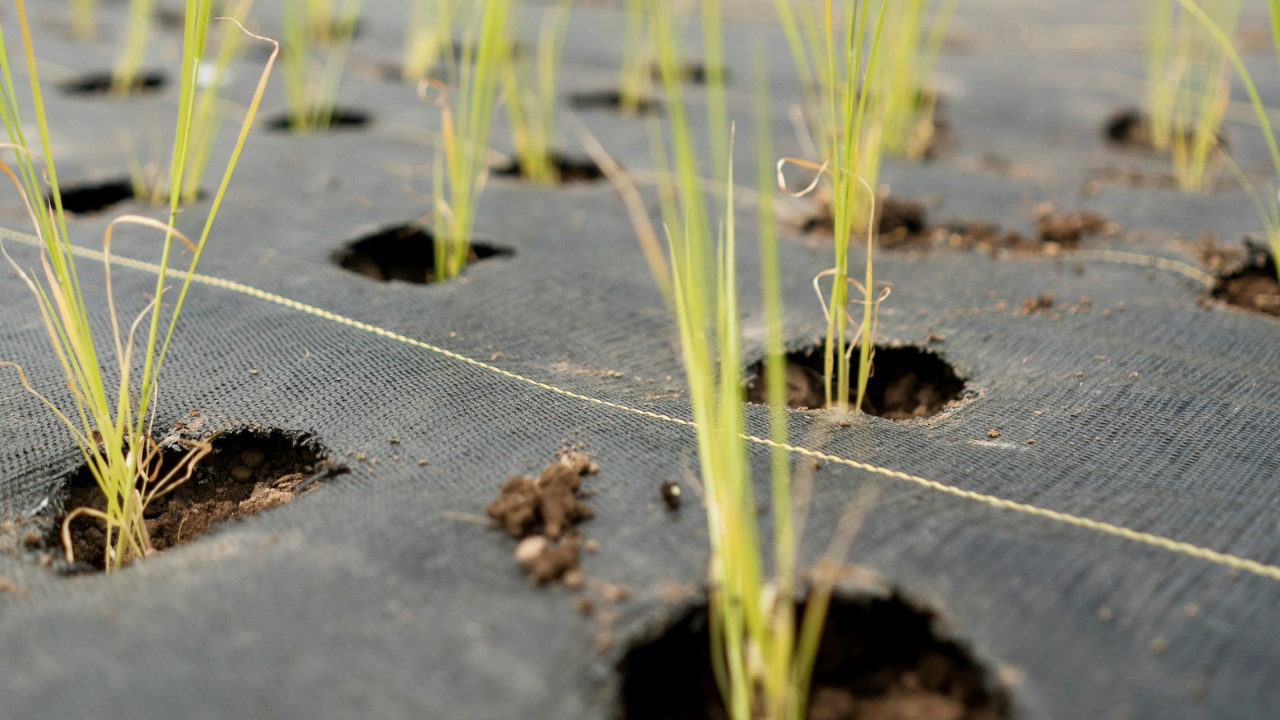
Plastics play a major role in modern farming. For instance, farmers can apply plastics in the form of mulching films, which help increase crop yields, improve water retention, control weeds, and make farming tasks easier. However , conventional plastics can remain in the soil for years, raising concerns about their accumulation and their long-term effects on soil health.
To address these concerns, biodegradable plastics are increasingly being explored as a more sustainable alternative. Among the most promising are polyhydroxyalkanoates (PHAs), bioplastics naturally produced by microorganisms and biodegradable through microbial activity in the environment.
But what really happens when these biodegradable materials go into the soil? Do they fully break down? And which organisms are in charge of this process?
Soil Microorganisms: The Drivers of Biodegradation
Soil is much more than just dirt. It is a living ecosystem where microorganisms play essential roles in ecosystem services such as nutrient cycling and the decomposition of organic matter. Some of these microorganisms are also capable of degrading biodegradable plastics such as PHAs, using them as a carbon source to grow and actively participate in their degradation.
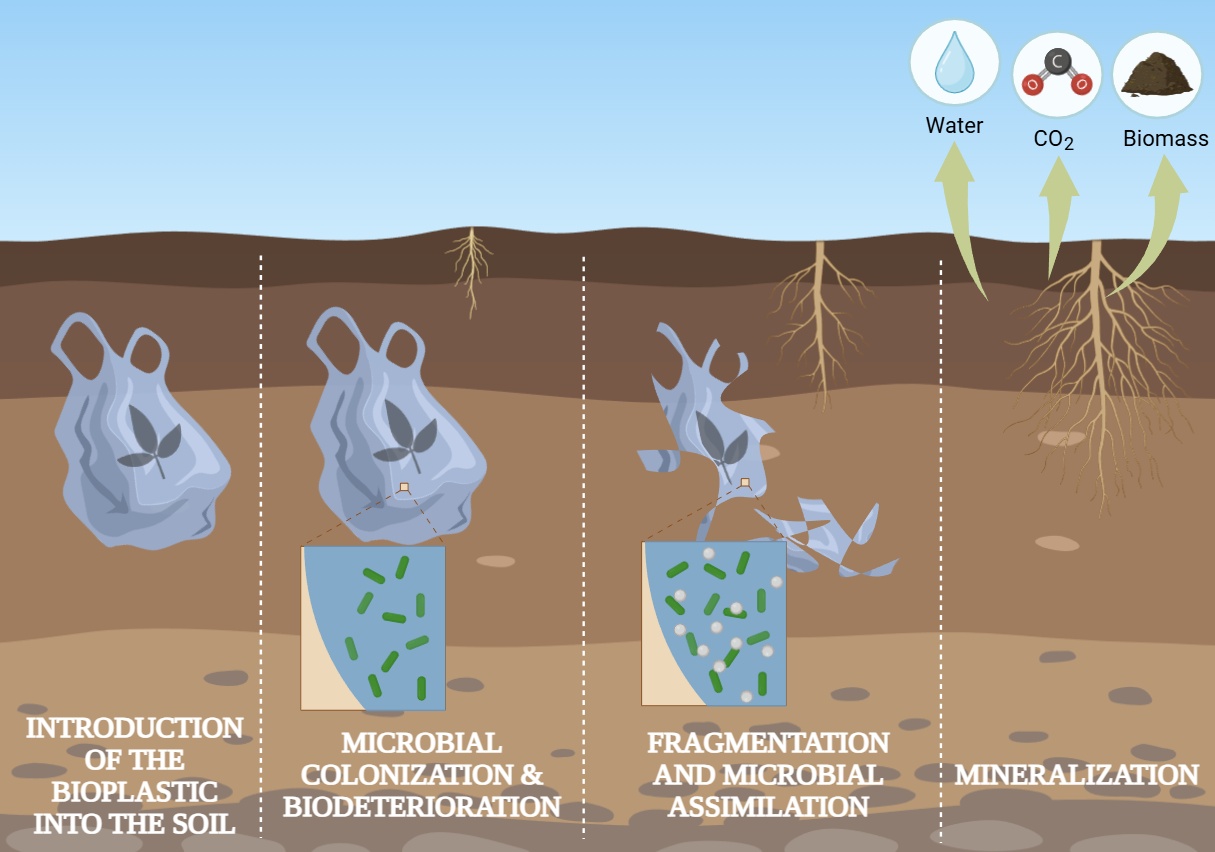
A simple overview of how biodegradation happens, showing how materials break down step by step under natural conditions. Source: Alcaraz-Dólera, M. et al. (2026).
From Laboratory to Soil Validation
Identifying microorganisms capable of degrading PHAs and evaluating how efficiently they work under different environmental conditions is essential. Researchers also need to determine whether biodegradation processes observed under laboratory conditions can be replicated in real agricultural soils.
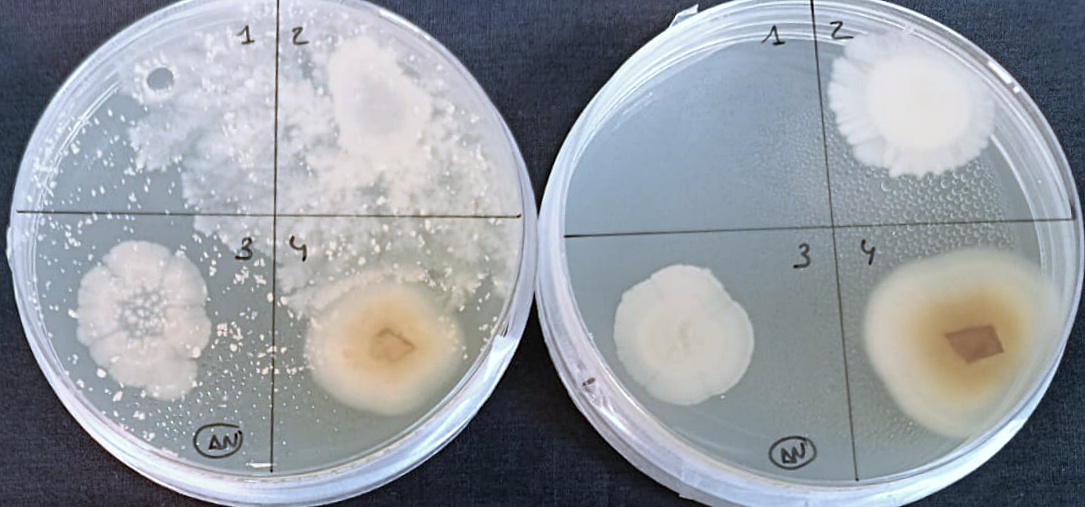
Experiment showing the growth of selected soil bacteria with and without PHA powder as a substrate, highlighting how the presence of PHA influences microbial development.
In natural environments, microorganisms interact with many other living organisms and are exposed to changing conditions such as temperature, humidity, oxygen availability, and nutrient levels. All of these factors can influence how quickly biodegradable plastics break down.
Within the PHAntastic project, we isolated PHA-degrading microorganisms from soils inoculated with PHAs, as well as selected strains previously described in the scientific literature. These microbial strains were tested under laboratory conditions, both in liquid cultures and in soil samples containing PHAs. These experiments are important because laboratory conditions are far more controlled than real soil environments.
Why is this important?
Studying biodegradation involves more than simply observing visible changes in materials. Researchers also need reliable ways to confirm that plastic is truly breaking down in soil.
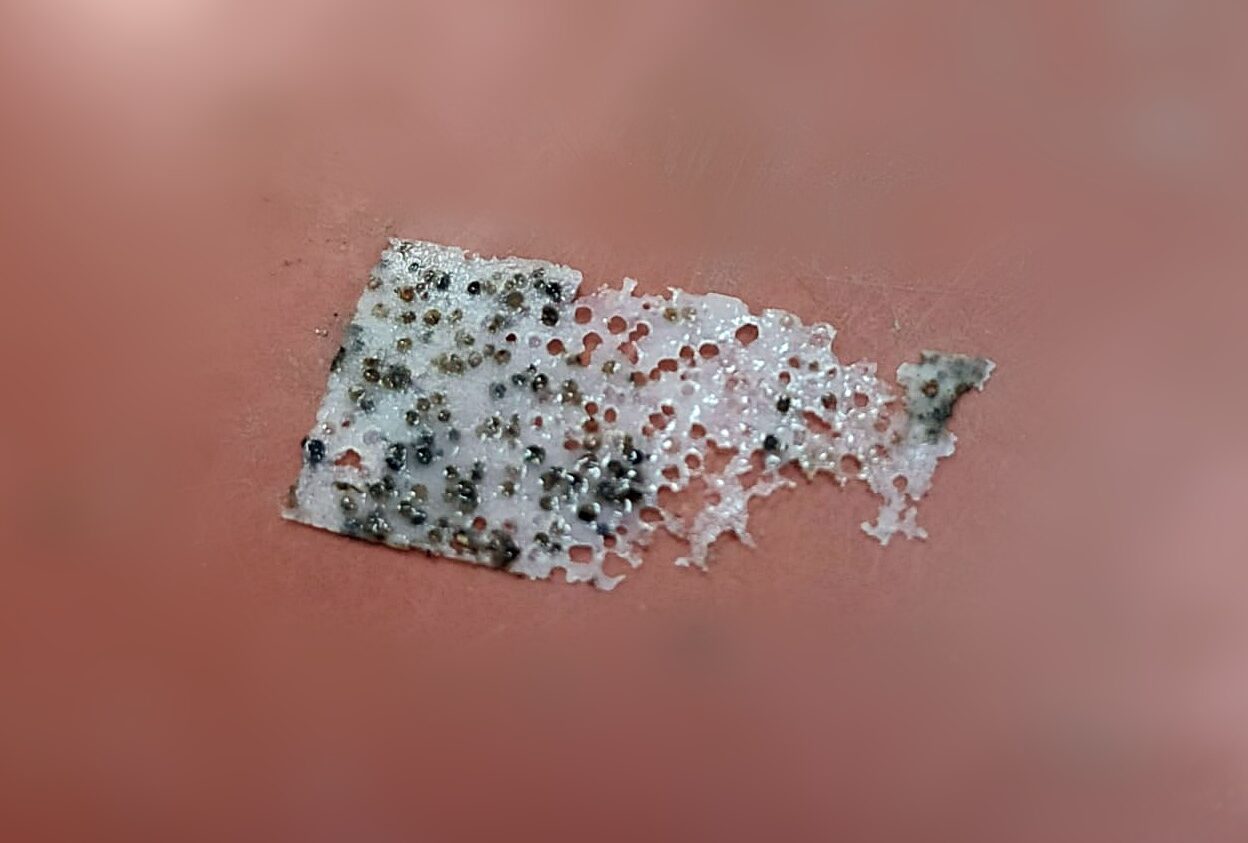
A piece of PHA after being left in soil, showing visible signs of degradation.
This is challenging because soil is a complex mixture of organic matter, microorganisms, and many other natural substances. By combining microbiological studies with analytical monitoring to quantify the remaining PHAs in soil, researchers gain a clearer understanding of what happens during biodegradation. This approach also helps distinguish true biodegradation from the simple fragmentation of PHAs into smaller particles.
These studies help ensure that biodegradable materials are not only effective during their use in agricultural soils, but also environmentally safe at the end of their life cycle.
Understanding how biodegradable plastics interact with soil microorganisms is essential for developing more sustainable materials for agriculture. The PHAntastic project is helping improve our understanding of the environmental fate of PHA-based products and their role in supporting a more circular and sustainable bioeconomy.
Written by: CSIC-CEBAS