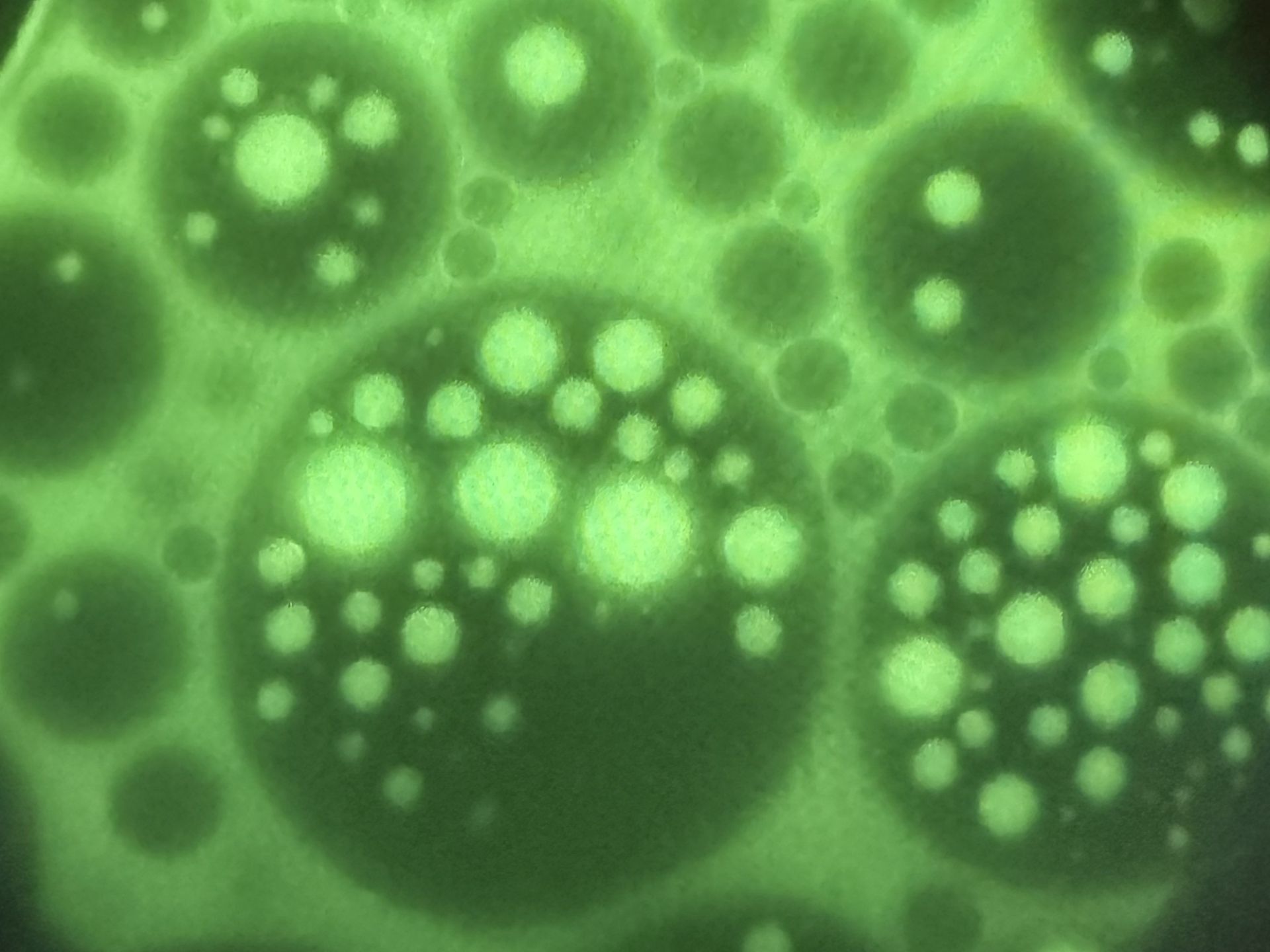
From Biomass to Smart Agricultural Delivery Systems: Designing Biodegradable PHA Capsules and Foams | Blog #10

22 May 2026

Agriculture is undergoing a major transformation as researchers and industries search for sustainable alternatives to conventional plastic-based materials. Within the PHAntastic project, one promising approach is the development of biodegradable delivery systems based on polyhydroxyalkanoates (PHAs), a family of biobased and biodegradable polymers produced by microorganisms. These materials have the potential to replace persistent petroleum-based plastics while offering advanced functionalities for agricultural applications.

At Chalmers University of Technology, our work focuses on developing PHA-based capsules and foams capable of delivering active compounds such as biostimulants, nutrients, probiotics or elicitors directly to crops and soils in a controlled and environmentally friendly way. Beyond simply replacing plastic, the goal is to create materials with carefully engineered structures that can influence how active compounds are released over time.

Why delivery systems matter in agriculture

Modern agriculture relies heavily on fertilizers, pesticides, and growth-promoting agents. However, many of these compounds are applied inefficiently, resulting in losses to the environment through leaching, volatilization, or degradation before plants can fully benefit from them.

Delivery systems can help address these challenges. By encapsulating active ingredients inside biodegradable matrices, it becomes possible to protect sensitive compounds and regulate their release depending on environmental conditions such as humidity, temperature, or microbial activity.

PHA materials are especially attractive because they combine biodegradability, biocompatibility, and tunable material properties. Unlike conventional plastics, PHAs can naturally degrade in soil environments, reducing long-term accumulation and environmental pollution.

Developing biodegradable capsules and foams

One of the key challenges in this work is designing processes capable of transforming PHA into structures suitable for agricultural applications. (Link to our recent review paper.) Depending on the desired function, the material can be processed into compact capsules or lightweight porous foams.

The development process involves optimizing several parameters, including polymer formulation, temperature, mixing conditions, and processing techniques. Small modifications during manufacturing can strongly influence the final morphology and performance of the material.

For capsule production, we investigate methods that allow active ingredients to be efficiently encapsulated while maintaining structural integrity during handling and storage and preserving the functionality of the compounds.
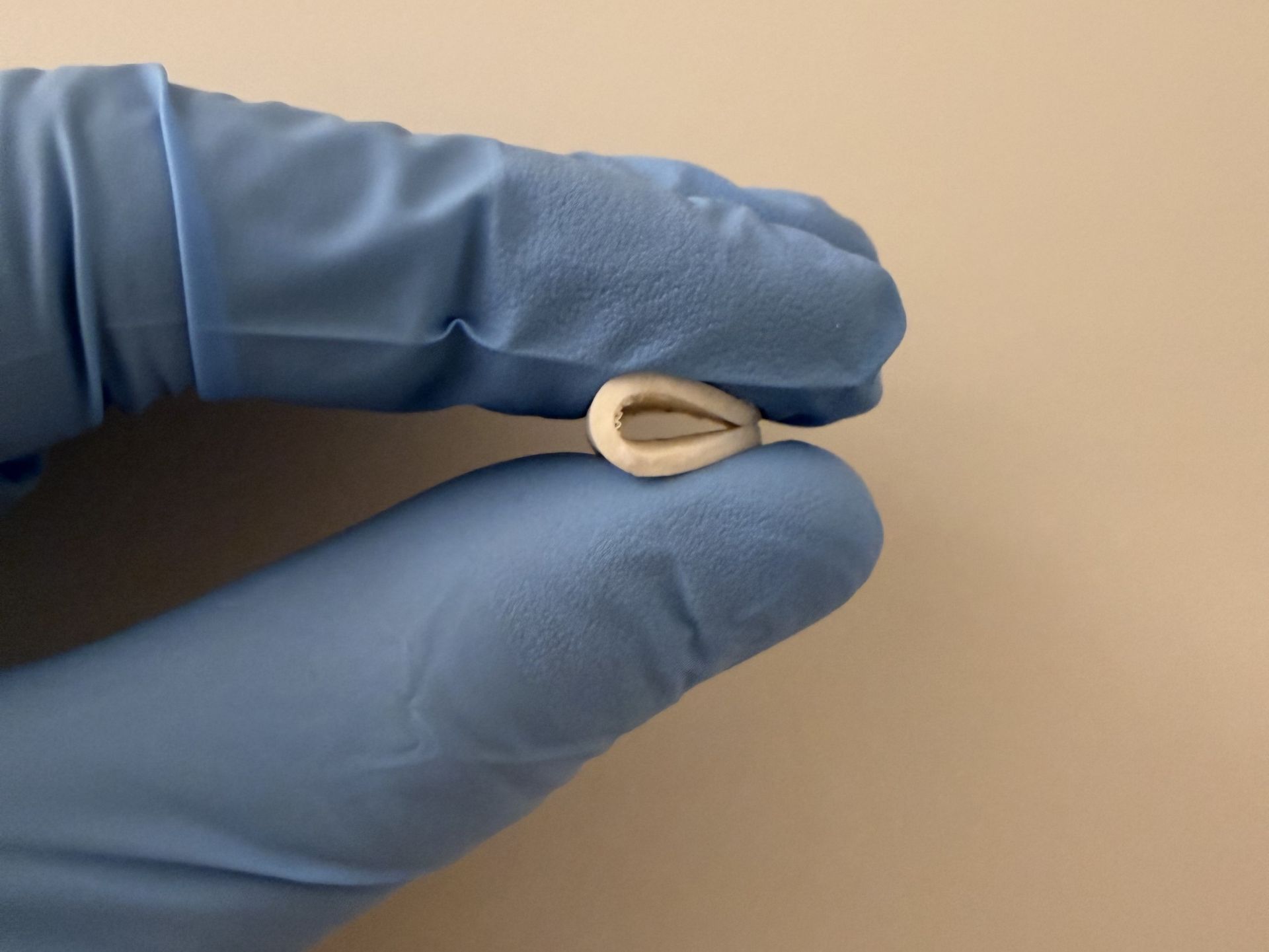
Flexible foam. Photo: Chalmers University

Foam production presents a different challenge. Agricultural foams require highly porous structures that can retain water, protect active compounds, and provide a large surface area for interaction with the environment. Achieving this balance requires careful control of pore formation and material expansion during processing.

An important aspect of our research is incorporating sustainable additives and biobased components to further improve functionality while maintaining biodegradability.

Looking closer: the importance of microscopic structures

While these materials may appear simple to the naked eye, their internal structures are highly complex. Microscopy techniques play a crucial role in understanding how processing conditions affect material architecture and performance.

By using scanning electron microscopy (SEM) and optical microscopy, researchers can observe features such as pore size distribution, wall thickness, surface roughness, and capsule morphology (see picture below). These microscopic characteristics directly influence properties including mechanical resistance, water absorption, degradation rate, and controlled release behavior.
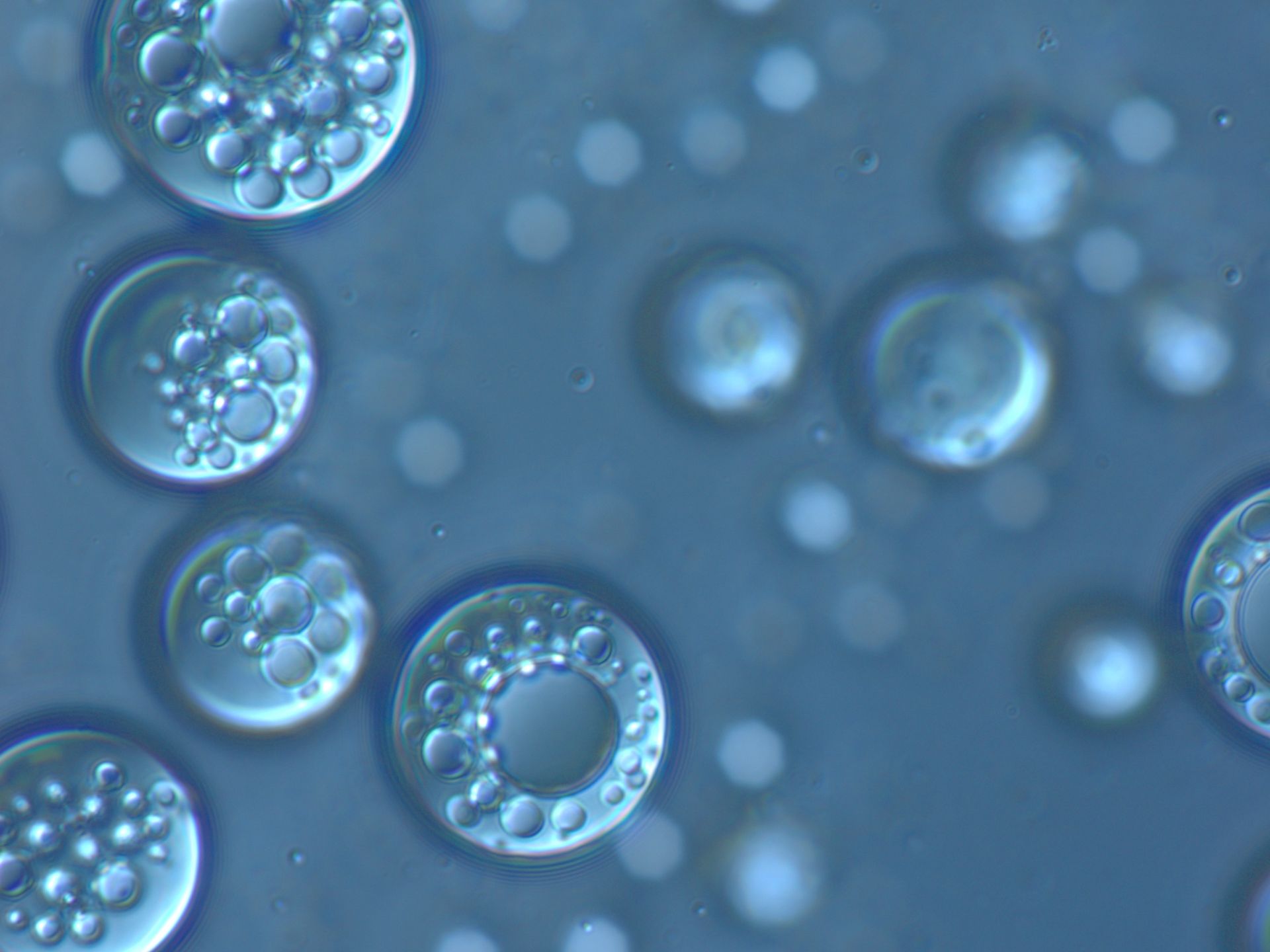
PHAntastic capsules

For example, highly interconnected porous structures in foams may enhance water retention and accelerate biodegradation, while denser capsule walls may provide slower and more controlled release of encapsulated compounds. Microscopic analysis also helps identify structural defects that could compromise material performance. Air bubbles, collapsed pores, or uneven dispersion of additives can all affect the final functionality of the delivery system.

Understanding these structure–property relationships is essential for scaling up production and tailoring materials for different agricultural applications.

Towards sustainable agriculture

The development of biodegradable PHA delivery systems represents an important step toward more circular and sustainable agricultural practices. By combining renewable materials, advanced processing technologies, and detailed structural characterization, the PHAntastic project aims to create next-generation agricultural materials that reduce environmental impact while improving efficiency. As research progresses, these materials could contribute to reducing plastic waste in agriculture and supporting smarter delivery of bioactive compounds in the field.

In future studies, the team will continue optimizing formulations and processing methods while investigating how these materials behave under real agricultural conditions. Understanding how microscopic structures influence large-scale performance will remain a key part of this journey toward sustainable agricultural innovation.

Written by: Chalmers University

Biobased and biodegradable plastic products (BBpPs) are crucial for mitigating the environmental impact of fossil-based plastics, particularly in humanitarian crises where waste management is challenging. Polyhydroxyalkanoates (PHAs) are a promising biodegradable biopolymer, known for their biocompatibility and lack of microplastic pollution.

With this in mind, the EU-funded ANIPH project will create a value chain for producing advanced wound dressings and biodegradable, recyclable water-resistant packaging suitable for various environments, including soil, freshwater and marine. It will integrate biodegradation at each stage of PHA production, formulation and conversion. An AI-based predictive and digital traceability tool will be developed to forecast biodegradation rates, material properties, and ecotoxicity, while ensuring full material traceability. Additionally, ANIPH will promote sustainable practices for the proper use and safe disposal of BBpPs.

AGRO4AGRI is an EU-funded project set to revolutionize plant nutrition and protection through cutting-edge nano and biotechnology. Within 4 years, by enhancing fertilizer efficiency and developing species-specific nematicides, the project aims to deliver sustainable and innovative solutions under the Safe and Sustainable by Design (SSbD) framework. Funded with €5.3 million from the Horizon Europe Programme, AGRO4AGRI brings together a diverse consortium of 12 high-profile European and non-European partners, including academic centres, research organizations, SMEs, foundations, and large companies from 7 countries. The project focuses on implementing nano and biobased controlled delivery systems for fertilizers, combined with plant biostimulants, to boost nutrient use efficiency. Additionally, it aims to develop target-specific biopesticides using RNAi technology, which are safe for humans and non-target organisms.
BioBIVE foresees the incorporation of bioactive agents such as extracts from plants or algae and microorganisms with antifungal capabilities to different biodegradable release systems of such compounds, which will improve crop yield and health. The efficiency of the proposed systems will be tested in real case studies on three major European crops (tomatoes, carrots and strawberries), on which scientific teams consisting of biologists, chemists, bioplastics manufacturers, biotechnologists, materials engineers, farmers, computer experts and economists will work.
VINNY is a highly innovative 4-year European Comission funded Project dedicated to transforming viticulture into a fully sustainable agriculture. How? By developing eco-friendly nanobiopesticides and nanobiofertilizers from grapevines and organic industrial by-products. The goal is to promote healthier grapes and soils, using sustainable methods and products. VINNY main objective is to develop vineyards sourced biopesticides (BP) and biofertilisers (BF) for the European vineyards. The novel actives will be further encapsulated into nano - biodegradable matrices, yielding enhanced effectiveness, and slow release.

Helian Polymers BV (HP) is a leading provider of PHA (PolyHydroxyAlkanoates) in Europe distributing several PHA building blocks in small volumes from 25 kg and bulk up to 50+ tons. 

In addition to distributing PHA in larger quantities, HP also offers a variety of raw or blended PHA based materials, facilitating fast and low-risk innovation; as well as providing R&D services, in-house compounding and testing capabilities.  

Role in the project

Under PHAntastic project, HP will be responsible of the formulation and compounding of PHBV blends suitable to be transformed into grown foams and mulch films.

Under development.

Role in the project

Under development. 

Under development.  

Role in the project

Under development.  

CETEC Biotechnology (CETBIO) is a Spanish biotechnology company specialized in the development of sustainable bioplastics and the promotion of circular solutions. As a spin-off of CETEC, it combines expertise in microbial fermentation, polymer science, and industrial biotechnology to develop bio-based materials. CETBIO operates pilot-scale facilities for PHBV production and contributes to the transition towards a circular bioeconomy through applied industrial biotechnology.    

Role in the project

CETBIO leads PHBV production using renewable carbon sources and Haloferax mediterranei, optimizing fermentation processes and tailoring polymer properties. It supports the development of PHA-based delivery systems and ensures material scalability and safety under SSbD framework.  

CETEC is a Technological Centre specialized in plastics and bioplastics with a broad experience in project management. Our research activities are dedicated to promoting circular economy principles and sustainable processes and products in the plastics area, through the development of new materials, product innovation, process optimization, and waste valorization.  

Role in the project

CETEC is the coordinator of the PHAntastic project. CETEC is involved in the formulation and compounding of the PHAs with safe and sustainable additives to ensure their processability and the required target properties to be converted into the PHAntastic final products. Moreover, CETEC leads the environmental assessment.    

RTDS Association is the non-profit arm of RTDS Group for implementation of the non-profit, EU funded projects. RTDS is an SME specializing in the development, implementation and communication of research, innovation and technological development projects, which includes IP management and business planning. 

RTDS provides professional management and dissemination services, tools and training to research institutions, SMEs and other organizations involved in international research and cooperation.  

Role in the project

As WP6 leader, RTDS Association ensures the market compliance and impact of the developed PHA-based delivery systems. This involves analyzing the market potential, defining exploitation strategies, and developing business cases for the delivery systems. Additionally, RTDS Association is tasked with managing intellectual property rights, including ownership, licensing, and data-sharing strategies.  

REVOLVE is a Brussels-based SME dedicated to communicating sustainability-related topics, with a focus on water, energy, ecosystems, mobility, and circular economy. They provide communication support to EU-funded initiatives and work closely with strategic partners to advance their sustainability projects. REVOLVE brings fresh perspectives and creative solutions to improve your outreach and boost your impact.  

Role in the project

REVOLVE leads the communication and dissemination strategy, visual branding, content creation, growth monitoring, hybrid event management, and digital marketing for the PHAntastic project.

The Fresh Fruits and Vegetables growers association is made up of more than 50 agricultural farms, companies and cooperatives that grow, package, market and ship their conventional and organic products to the main markets all around Europe. We take care of more than 50.000Ha of crops by the Mediterranean Sea in southeastern Spain, using the most advanced techniques to join the best quality with better environmental and social integration of our work 

Role in the project

As growers we are, no one knows better than us, the problems farmers face in getting fresh food from the soil, so we will test the new mulch films developed in the PHAntastic project, checking the bio-products delivery system and its advantages under real hard working conditions. 

Under development.

Role in the project

Under development.

Knowledge Value Consulting (KVC) is an international SME specialised in European funding programmes for Research, Development and Innovation projects. KVC supports researchers and entities to develop and materialise their ideas into successful projects. 

KVC is specialised in Social Sciences and Humanities (SSH). Its multidisciplinary team brings extensive experience in theoretical and methodological frameworks, including behaviour change models, citizen and public participation strategies, co-creation methods, socio-economic impact assessment, and Safe and Sustainable by Design approaches. 

Role in the project

KVC contributes with its expertise and background on social readiness assessment, Safe and Sustainable by Design (SSbD) assessment in the social & economic areas, and end-user evaluation (market fit and social acceptance), also in the ethics and data management area. 

Under development

Role in the project

Under development

CEBAS-CSIC, based in Murcia, is a CSIC research center with more than 50 years of experience and around 300 professionals dedicated to research, training, and technical support. Its multidisciplinary approach encompasses three scientific areas: Agricultural Sciences, Food Science and Technology, and Natural Resources. Its mission is to generate advanced scientific knowledge and develop applied technologies to respond to today's major challenges, such as the production of sufficient and healthy food, efficient and sustainable water management, crop adaptation to climate change, and the preservation of natural resources. All of this is achieved through an integrated approach that combines sustainability, innovation, technology transfer, and commitment to society. Furthermore, the center maintains close collaboration with productive sectors, public institutions, and national and international scientific networks, thus promoting the transfer of results to the agri-food business sector and the implementation of solutions in the region. 

Role in the project

CEBAS is involved in these WPs: 

  • WP1. Selection and adaptation of active bioproducts for PHAntastic delivery systems 
  • WP3. Laboratory production and testing of PHAntastic delivery systems 
  • WP4. Demonstration of PHAntastic delivery systems in collaboration with end-users 

Chalmers University of Technology is a leading Swedish institute of technology renowned for research and education in engineering, natural sciences, and architecture. With a strong focus on sustainability and innovation, Chalmers fosters interdisciplinary collaboration to tackle global challenges. The PHAntastic team at Chalmers specializes in biobased processes, development  and characterization of materials from renewable resources. 

Role in the project

In the PHAntastic project, Chalmers leads the development of sustainable agricultural materials by formulating PHB’s coatings and foams incorporating biostimulants and elicitors

ARCHA is an Italian company that provides chemical & biological analytical, research and consultancy services to enterprises, in different industrial sectors such as food, waste management, etc. Laboratory area has been accredited according to ISO 17025, research area performs R&D&I activities, the consulting area provides services related with regulatory compliance on the environment, H&S in workplaces, implementation of Quality, Environment and Safety systems. 

ARCHA has been recognised by Certification Bodies to perform the complete analytical protocols for SOIL biodegradability certifications (OK biodegradable SOIL by TÜV Austria and Soil biodegradable by DIN CERTCO), for industrial and home compostability, water and marine certifications. ARCHA is certified according to ISO 9001, ISO 14001, ISO 45001 and SA8000 and provides services related with regulatory compliance, implementation of Quality, Environment and Safety systems. 

Role in the project

ARCHA will assess the relevant standardization and certification landscape for PHAntastic delivery systems, regulatory requirements for fertilizers and for food contact materials, will evaluate the human health and safety of production processes of the PHAntastic delivery systems to verify the compliance with OSH “Framework Directive”. Following the OK biodegradable SOIL, MARINE and WATER schemes (developed by TÜV Austria), ARCHA will analyzed the developed active bioproducts, PHA blends, active compounds, and PHAntastic delivery systems. 

Probelte is a pioneering agribiotechnology company with over 50 years of experience in the agricultural sector. It develops innovative solutions based on microorganisms to enhance productivity, restore soil balance, and ensure healthy food production. 

In 2021, Probelte became part of the new integrated solutions platform Agronova Biotech, further strengthening its value. Through innovative products, technical support, and digital tools, it provides farmers with guidance and solutions at every stage of the production cycle. 

Role in the project

PROBELTE leads WP1, overseeing the evaluation, selection, and adaptation of nine active bioproducts for integration into PHA-based delivery systems, specifically growth foams and mulch films. PROBELTE coordinates the screening and adjustment of plant-based compounds, elicitors, microelements, and PGPR to ensure compatibility with processing conditions and end-user needs. The company also contributes to the development of microorganism cocktails and impregnation solutions, supporting the project’s goal of sustainable, effective, and safe bio-based agricultural inputs.