What if the end of one cultivation cycle could help start another? This idea captures Greenport Boskoop’s circular ambition. Residual streams from agriculture and horticulture could potentially be processed into new raw materials, including biopolymers, which could then be used in growing systems for new plants. From plant residues to new growth: exploring the potential of circular materials.
Why are we looking for alternatives to peat?
Peat has long been an important component of potting soil and other growing media. It retains water and nutrients effectively, is relatively lightweight and provides a suitable environment for plant roots. Peat has therefore played an important role in the development of the tree nursery sector in the Boskoop region.
At the same time, its use is under increasing scrutiny. Peat extraction releases stored carbon and can damage valuable peatlands, which play important roles in biodiversity, water management and carbon storage. The Dutch horticultural sector is therefore working to reduce the environmental impact of growing media, with a gradual shift towards peat-reduced and ultimately peat-free alternatives.
However, replacing peat is not straightforward. Different materials have different physical, chemical and biological properties, including variations in aeration, stability, acidity and water and nutrient retention. A suitable growing medium will therefore often require a carefully formulated blend of different raw materials to meet the needs of specific plants and growing conditions.
A potential role for biopolymers
Biopolymers offer one possible avenue in the search for alternative growing media. Within PHAntastic, researchers are investigating porous growth foams based on polyhydroxyalkanoates (PHAs), a family of bio-based and biodegradable polymers.
These foams could potentially be used as components of growing media or incorporated into substrate blends. Their porous structure may provide space for air and water while supporting root development. Researchers are also investigating whether the materials can carry beneficial microorganisms and enable their gradual release.
This multifunctional approach could allow the material to do more than provide physical support. Depending on its formulation and performance, it could contribute to the growing environment while offering the potential to biodegrade after use.
However, these functions need to be evaluated under relevant conditions. Practical trials are essential to determine how the materials behave in different growing media, how they affect plant development and whether they can meet the requirements of professional nurseries.
Why Greenport Boskoop is taking part
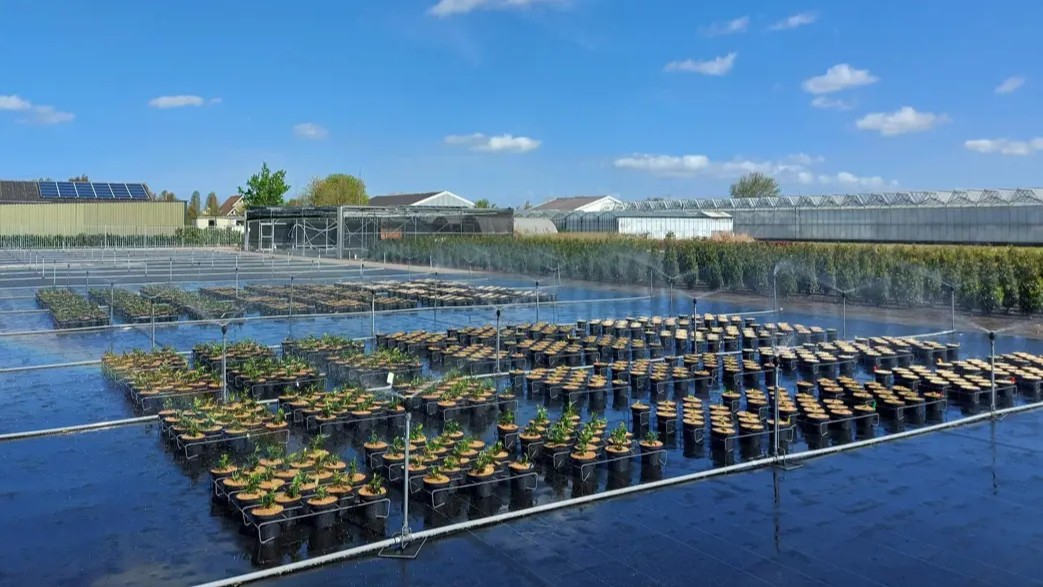
Within PHAntastic, Greenport Boskoop represents the Dutch tree nursery sector. Together with growers and knowledge partners, Greenport Boskoop is helping evaluate how new growth foams and other biodegradable materials could perform under Dutch growing conditions.
Key questions include whether the materials remain sufficiently stable throughout the cultivation period, how they affect irrigation, soil life and root development, and whether they can ultimately be produced reliably, affordably and at sufficient scale.
PHAntastic provides an opportunity to investigate these questions alongside European research institutes, companies and horticultural regions. Greenport Boskoop also helps ensure that the experiences and practical needs of tree growers inform the development process from an early stage.
This collaboration is important for understanding not only how the materials perform in research settings, but also whether they could be suitable for practical use in commercial nurseries.
A new cycle begins with collaboration
Biopolymers are not necessarily a standalone solution to peat replacement. They could, however, become one component of a broader range of renewable and circular raw materials. By combining different materials and evaluating their performance, it may be possible to develop growing media that meet horticultural requirements while reducing their environmental impact.
The longer-term vision is to connect different stages of the production cycle: residual materials from agriculture and horticulture could become feedstocks for new materials, which could then find applications in growing systems for the next generation of plants.
Through PHAntastic, Greenport Boskoop is helping explore the potential of this approach, bringing together research, material development and practical experience from the tree nursery sector.
The question is no longer just how to replace peat, but how different renewable materials could work together to support more circular approaches to plant production.
Written by: René van Tol from Greenport Boskoop / Delphy