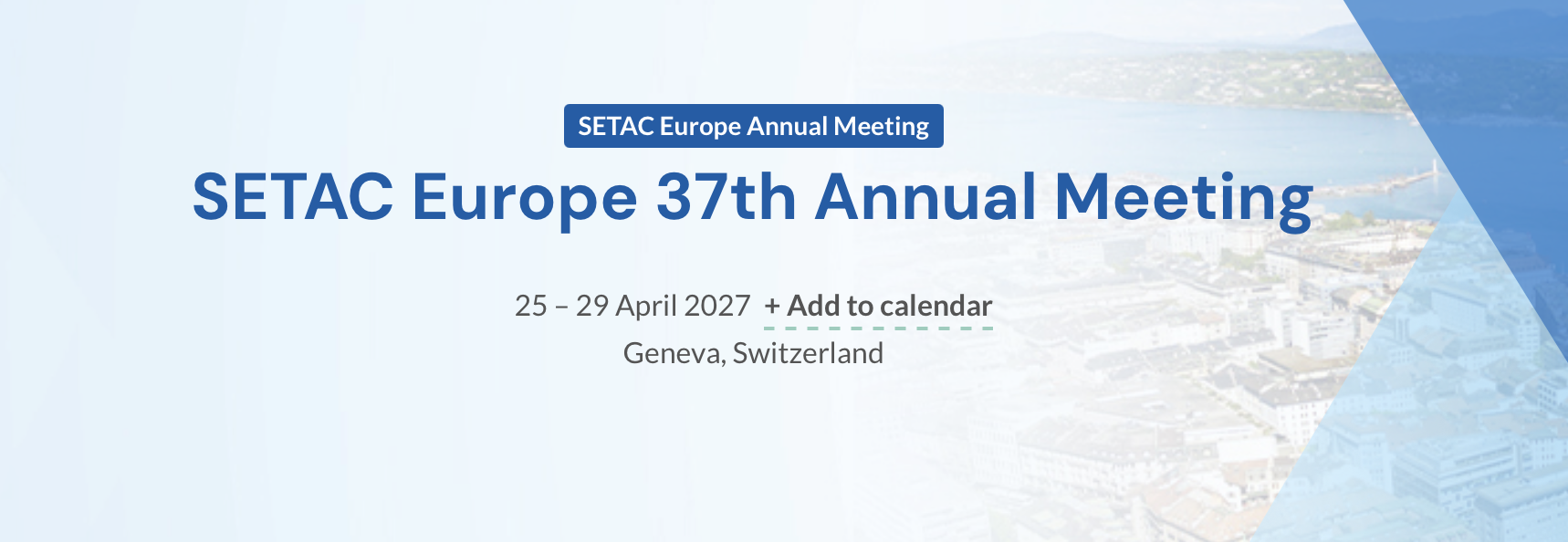
The Society of Environmental Toxicology and Chemistry (SETAC) is a not-for-profit, worldwide professional organization with approximately 10,000 members and 21,000 followers from more than 90 countries dedicated to advancing environmental science and environmental management.
Where? Geneva, Switzerland
When? 25–29 April 2027
Call for Abstracts:
PHAntastic’s sister project AGRO4AGRI is inviting researchers, project partners, regulators, industry specialists and practitioners to submit an abstract to our SETAC Session: ‘From Lab to Field to Policy: Making Stakeholder Engagement Work for Safe and Sustainable by Design’. The session sits within Track 6:11 Environmental Policy, Risk Management, and Science Communication.
They welcome practical, evidence-based contributions showing how stakeholder input, environmental science, regulatory requirements or end-user needs have shaped research, testing, risk assessment, field validation, decision-making or implementation.
Submissions should include a clear stakeholder engagement and/or Safe and Sustainable by Design dimension. Relevant areas include:
🌿plant protection products
🌱fertilisers
🌿biostimulants
🌱biotechnology
🔬advanced materials
📈other emerging technologies,
Contributions might cover:
➡ practical applications of Safe and Sustainable by Design
➡ environmental risk assessment linked to real-world decisions
➡ engagement with regulators, industry, farmers, end users or civil society
➡ field validation and integration of laboratory, regulatory and user evidence
➡ barriers to adoption, implementation or commercial uptake
➡ communication of uncertainty, risk, benefits and trade-offs
➡ lessons from engagement that changed the research – or didn’t go to plan.
Abstract submission deadline: 10 November 2026
Why submit?
SETAC Europe brings together environmental scientists, regulators, industry, policy specialists and researchers from across Europe and beyond. Presenting in this session offers an opportunity to put your work in front of an audience directly involved in environmental assessment, regulation and implementation; receive feedback from outside your own project or discipline; compare approaches with other research and innovation initiatives; and build contacts with people working across science, policy, industry and practice.
The session is also intended to create a useful cross-project discussion around what actually works in SSbD and stakeholder engagement; including the difficult cases, evidence gaps and lessons learned, not just success stories.
Work does not need to be at the end of a project to be relevant. They welcome both completed studies and well-developed work in progress where there are substantive findings or practical learning to share.